Quick Summary
The best artificial grass front yard ideas pair the right turf product with a design style that fits your home's architecture, from clean modern lines to warm Mediterranean textures to rock-and-turf desert-inspired layouts. This guide expands beyond generic design tips to cover specific style categories, including modern, Mediterranean, rock landscaping, and paver-integrated designs, along with the turf specs that actually make each look work and realistic sizing and cost context for each approach.
Artificial grass front yard design has moved well beyond "replace the lawn with turf." The best results come from treating turf as one material in a broader design plan, paired thoughtfully with rock, pavers, plantings, and your home's existing architecture. This guide walks through the major front yard design styles where artificial grass plays a starring role, what turf specs support each look, and practical context on sizing and cost so you can plan realistically before getting quotes.
Whether you're starting from a tired, patchy natural lawn or planning a full landscape redesign from scratch, the style you choose should reflect your home's architecture as much as your personal taste.
Modern Artificial Grass Front Yard Design
A modern front yard built around artificial grass leans into clean lines, restraint, and contrast. This is one of the most requested styles for front yard artificial grass design, and it works because turf's uniform color and texture is exactly the kind of consistent backdrop modern design depends on.
What defines the look: Sharp geometric lawn shapes (rectangles, squares) bordered by steel or aluminum edging, a limited plant palette of architectural greenery rather than colorful flower beds, and a restrained material mix, usually just turf, concrete or large-format pavers, and one accent material like dark gravel or weathered steel. The overall effect should feel deliberate and uncluttered, with every material choice serving the composition rather than competing for attention.
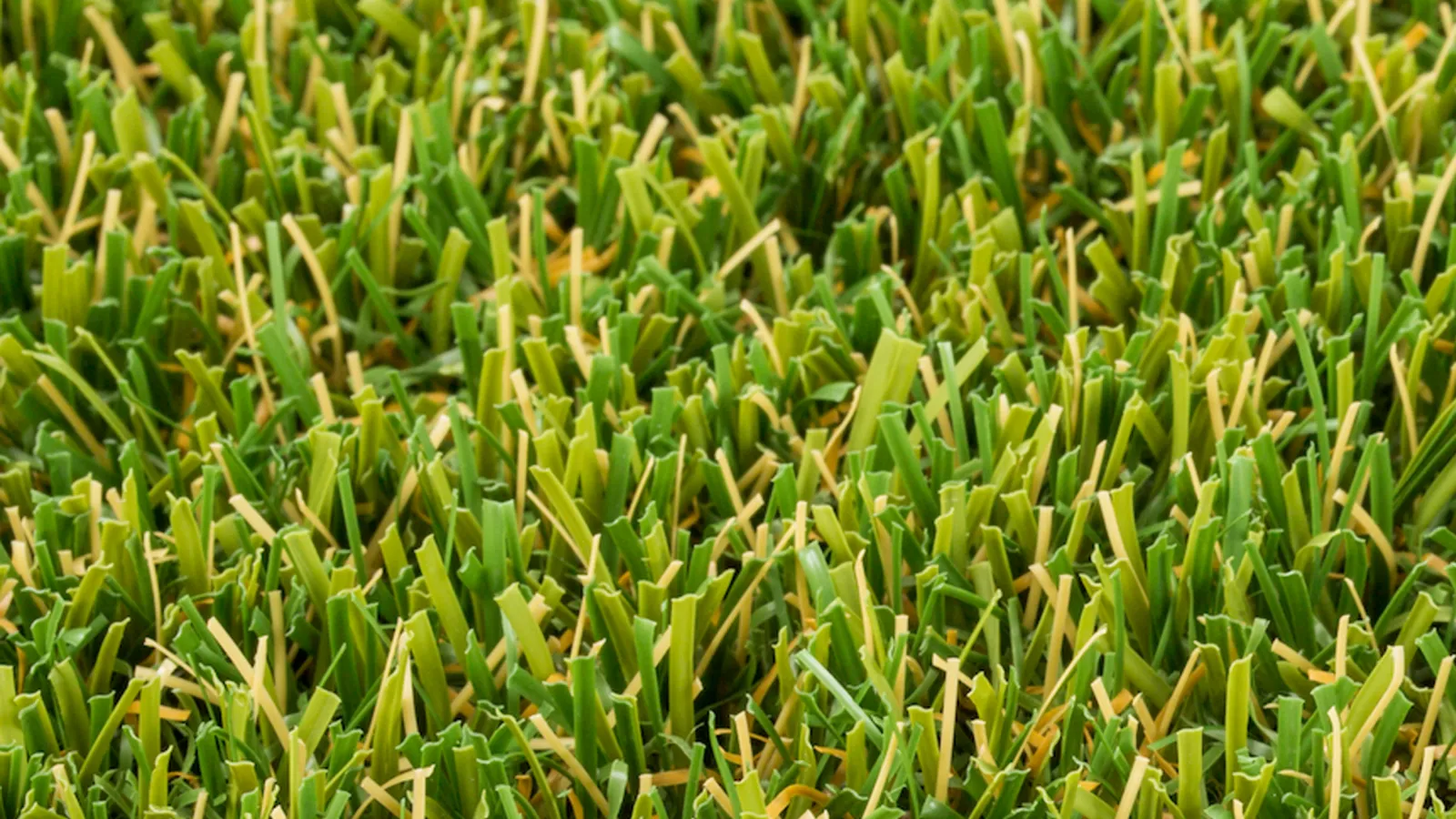
Turf specs that support this style: Shorter to mid pile height (1 to 1.5 inches) with a dense, monofilament fiber reads as more tailored and intentional than longer, plush pile, which tends to look softer and less architectural. A single, consistent blade color from Turf Tek's landscape turf line rather than heavily variegated multi-tone turf also supports the clean, uniform look modern design depends on.
Practical context: A modern front yard redesign on an average suburban lot (roughly 300 to 600 sq ft of turf area) typically runs in the same cost range as a standard residential turf installation, with the design cost difference coming primarily from hardscaping (steel edging, pavers, gravel borders) rather than the turf itself.
Mediterranean-style Front Yard With Artificial Grass
Mediterranean design brings warmth, texture, and a relaxed, sun-soaked feel, built around terracotta tones, gravel, olive or cypress-style plantings, and stone. Artificial grass fits this style as a controlled green accent rather than a dominant lawn, which actually makes it a lower-turf, lower-cost approach in many cases compared to a full-coverage lawn.
What defines the look: Smaller, contained turf areas framed by gravel or decomposed granite, terracotta planters and warm-toned stone, drought-tolerant Mediterranean-style plantings, and curved or organic shapes rather than the hard geometry of modern design.
Turf specs that support this style: A slightly longer, multi-tone pile (1.5 to 2 inches) with realistic thatch layering reads as more natural and softens the contrast against gravel and stone, supporting the relaxed feel central to this style.
Practical context: Because turf typically covers a smaller footprint in Mediterranean designs, often 150 to 350 sq ft used as accent rather than full coverage, the turf portion of the budget is usually lower, with more of the project cost going toward stone, gravel, and planting.
Front Yard Artificial Grass and Rock Landscaping
Rock landscaping paired with turf is one of the most requested combinations for homeowners who want a low-maintenance yard without going fully hardscape. This pairing works especially well for properties with drainage challenges or homeowners looking to reduce water use further than turf alone achieves.
What defines the look: Defined zones of turf bordered or interspersed with river rock, boulders, or decorative gravel, often used to break up a large lawn area into a more dynamic, textured composition. Larger boulders as focal points, smaller gravel as ground cover and borders, and turf as the "soft" element that ties the composition together visually.
Turf specs that support this style: Mid pile height (1.25 to 1.75 inches) with strong UV resistance, since rock-and-turf designs are common in full-sun exposure where fading resistance matters more over time.
Practical context: This is one of the more cost-flexible approaches, since the rock-to-turf ratio is fully adjustable. A yard with 60% rock and 40% turf costs meaningfully less in turf material than a fully grassed lawn, while still delivering the green, lived-in look homeowners want from the front of a property.
Front Yard Artificial Grass With Pavers
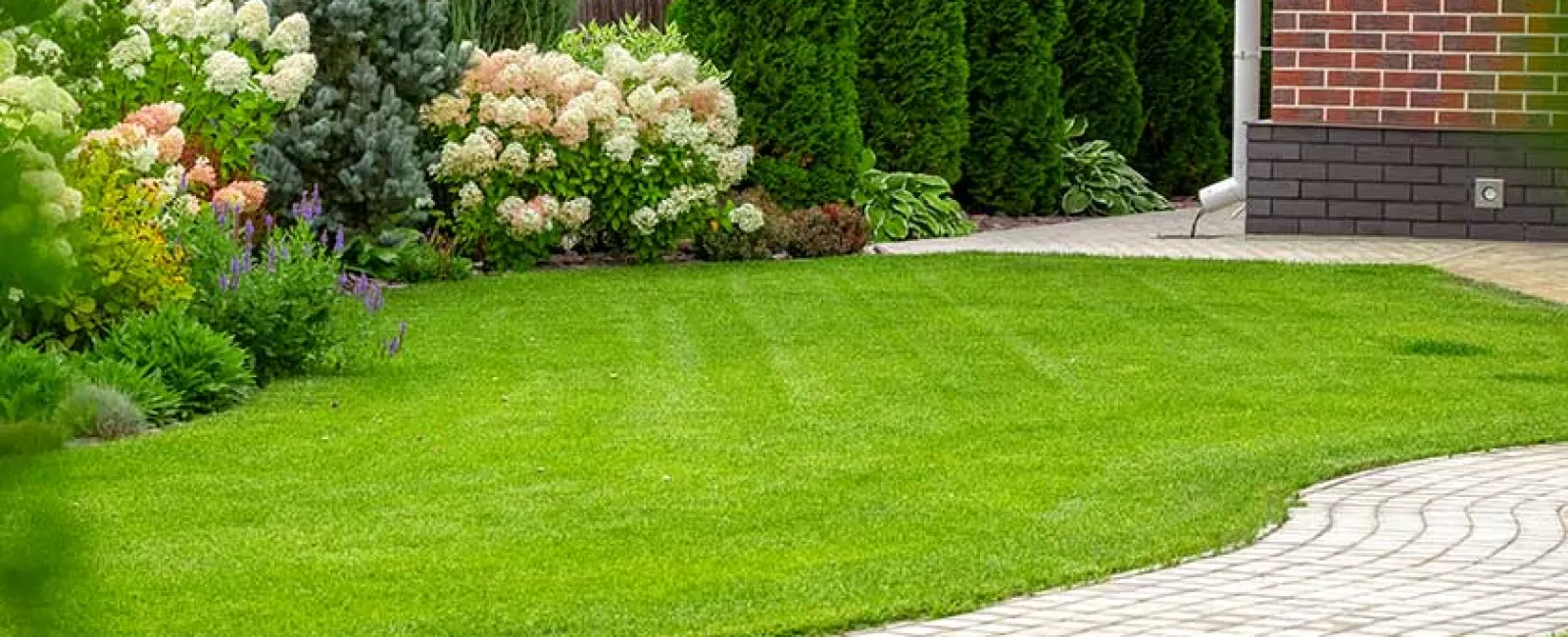
Pairing turf with pavers creates defined pathways, seating areas, or driveway borders while keeping a green, lush feel throughout the rest of the yard. This is a particularly practical combination for front yards that need to balance walkability with curb appeal.
What defines the look: A clear paver pathway or border (concrete, natural stone, or manufactured pavers) running through or alongside turf, with turf filling the surrounding space rather than competing with the hardscape for attention. Clean, straight seams where turf meets paver edges are critical here, the kind of precision that comes from experienced artificial grass installation. A poorly cut transition between turf and pavers is one of the most visible signs of a low-quality installation in this style specifically.
Turf specs that support this style: Mid pile height with a tight, even weave performs best around paver edges, since shorter, denser turf trims more cleanly against hard borders than longer, looser pile heights.
Practical context: Paver-integrated designs add hardscape material cost on top of standard turf installation, but they also reduce the total turf square footage needed, which can offset some of that added cost depending on the ratio of paver to turf in the final design.
What Changes When You Switch to Artificial Grass
For homeowners weighing whether a front yard redesign is worth it, the before-and-after picture typically includes a few consistent shifts regardless of which style is chosen.
Before: Natural grass that browns or thins during peak summer heat or dry stretches, inconsistent color and density across the yard depending on sun exposure and soil quality, visible wear patterns near walkways and high-traffic zones, and a front yard that looks noticeably different depending on the season or how recently it was mowed.
After: Consistent, even color and texture across the entire yard regardless of season or weather, sharp, intentional lines wherever turf meets hardscape, gravel, or planting beds, and a front yard that photographs and shows the same in any month of the year, which matters significantly for curb appeal and, if relevant, listing photos.
The style you choose changes the aesthetic, but this baseline shift, consistency, regardless of season, weather, or maintenance schedule, is the common thread across every design direction.
Choosing the Right Style for Your Home
A few practical questions help narrow down which direction fits best:
- What's your home's architecture? Contemporary homes generally pair best with modern, clean-line designs. Traditional or Mediterranean-influenced architecture often suits the warmer, textured Mediterranean style better. Ranch and craftsman-style homes frequently work well with rock-and-turf or paver-integrated designs.
- How much maintenance are you willing to do on the non-turf elements? Gravel and rock landscaping require periodic weed management and occasional rock replenishment. Paver areas need occasional cleaning and joint maintenance. Pure turf-and-planter modern designs tend to require the least non-turf upkeep.
- What's your climate and sun exposure? Full-sun, water-restricted areas often lean naturally toward rock-and-turf or Mediterranean styles, which already minimize turf footprint and water-dependent plantings. Turf Tek's exclusive turf products are engineered for UV resistance across all of these conditions.
- What's your budget priority? If turf cost is the primary concern, rock landscaping with a smaller turf footprint offers the most flexibility. If hardscape and structure matter more, modern and paver-integrated designs put more of the budget into clean lines and materials rather than plant selection.
Ready to Design Your Front Yard?
Turf Tek USA designs custom front yard landscapes built around your home's architecture and your preferred style, whether that's clean modern lines, warm Mediterranean texture, rock-integrated design, or paver-defined walkways.
We are proud to use American-made turf products. Each member of our team is trained on our proprietary installation system to ensure a seamless installation at every job site. Every project is backed by a 10-year product warranty and 2-year installation warranty. Call (631) 651-5777 or contact us for a free site visit and a design conversation tailored to your home.