Quick Summary
Artificial turf and trees can work together when installation methods respect root health and soil access. Open tree wells, permeable base materials, and thoughtful drainage design all help reduce stress on mature trees. Homeowners should avoid tight turf installation around trunks and maintain airflow and moisture near root zones. Professional planning also helps prevent root damage, soil compaction, and long-term turf movement.
Tree roots and lawn performance often compete for the same space, especially in landscapes that struggle with patchy grass, exposed soil, or drainage problems. Many homeowners consider artificial turf around trees because it creates a cleaner and lower-maintenance yard, but poor installation can place stress on root systems over time.
The relationship between trees and synthetic grass depends heavily on planning, drainage, soil access, and construction methods. With the right layout and professional installation, homeowners can create functional outdoor spaces that preserve mature trees while improving the appearance and usability of the landscape.
Why Trees React Poorly to Improper Turf Installation
Many tree problems begin during excavation and grading. Tree roots often extend far beyond the visible canopy, and heavy construction can damage fine roots responsible for water and nutrient absorption.
Compacted aggregate layers also change how oxygen and moisture move through the soil. If installers seal the entire root zone beneath dense materials, the tree may decline slowly over several years. Heat retention from artificial turf can also place additional stress on shallow root systems during warmer months.
These concerns explain why artificial grass around tree installations requires more planning than standard turf projects.
Leave Open Space Around the Tree Base
One of the most effective ways to reduce stress on trees involves leaving exposed soil around the trunk. Most installations perform better when the turf stops several feet away from the tree itself.
This open area, often called a tree well or island border, gives the trunk room to expand naturally while allowing air, moisture, and nutrients to reach the upper root zone. Many homeowners finish these sections with mulch or decorative stone to blend the landscape together more naturally.
Use Permeable Base Materials
The base beneath artificial turf affects both drainage and root health. Dense materials that trap moisture or restrict airflow create problems beneath the surface over time.
Permeable crushed stone bases allow water to move through the turf system more efficiently while reducing standing moisture near roots. Proper grading also helps direct excess water away from both the tree and nearby structures.
Experienced installers often adjust excavation depth around mature trees to avoid unnecessary root disturbance during construction.
Understand How Roots Affect Turf Stability
Tree roots continue to grow long after turf installation. In some landscapes, shallow roots may eventually lift sections of synthetic grass or create uneven surfaces.
Trees with aggressive root systems often require additional spacing between the turf edge and the trunk. Flexible installation methods also help accommodate small root movement without damaging seams or edges.
This matters in both residential landscapes and larger commercial projects designed by an artificial grass provider and installer.
Manage Heat Near Mature Trees
Artificial turf absorbs more heat than natural grass, especially during peak summer conditions. Higher surface temperatures may dry out upper root zones faster in some locations.
Shade from tree canopies helps reduce heat buildup across the turf surface, but homeowners should still monitor moisture conditions near the base of mature trees. Mulch within open tree wells also helps regulate soil temperature and retain moisture naturally.
Landscapes with artificial turf around trees usually perform better when irrigation zones continue serving nearby root systems.
Keep Organic Debris from Building Up
Leaves, bark, seeds, and twigs naturally collect on synthetic turf beneath trees. If this debris sits too long, it can break down between turf fibers and affect drainage performance.
Routine cleanup with a leaf blower, turf rake, or soft broom keeps the surface cleaner and extends the life of the installation. This maintenance becomes even more important in heavily shaded landscapes or pet areas where debris and moisture collect more frequently.
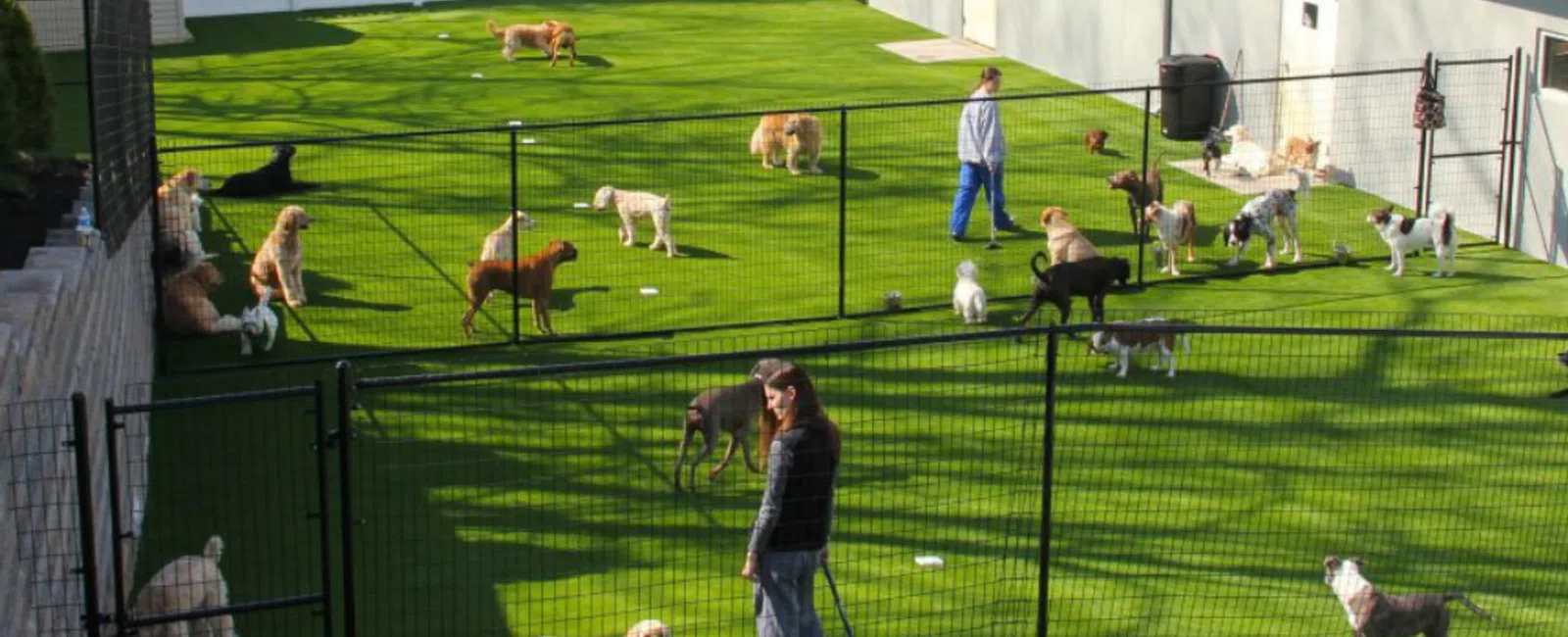
The same cleaning habits also apply to fake grass for dogs to pee on balcony spaces surrounded by planters or rooftop landscaping.
Balance Landscape Design with Tree Health
Homeowners often install artificial turf to simplify maintenance around difficult lawn areas. Tree-covered spaces with patchy grass, exposed roots, or poor sunlight usually benefit from synthetic turf because natural grass struggles to survive there.
Still, the goal should not involve covering every inch of exposed soil. Healthy landscapes balance hardscape, mulch, turf, and open planting zones in ways that respect mature root systems.
Artificial grass around tree layouts usually looks more natural when the design incorporates curved edges and organic transitions instead of rigid cut lines.
Know When Turf May Not Be the Right Choice
Some trees react poorly to nearby construction due to age, root sensitivity, or declining health. Large mature specimens with shallow root systems may require additional evaluation before turf installation begins.
In these situations, homeowners benefit from consultation with experienced installers familiar with drainage, grading, and root preservation. Certain projects may also require input from an arborist before excavation begins.
Professional Installation Makes a Difference
Tree-focused turf installation requires more than laying synthetic grass over compacted soil. Proper drainage, thoughtful spacing, root awareness, and precise grading all shape how the landscape performs over time.
Experienced crews understand how to work around mature root systems without creating unnecessary stress beneath the surface. Professional installation also reduces future problems like seam separation, uneven settling, and drainage failure.
At Turf Tek USA, we install artificial turf systems that work with your landscape instead of against it. Our team carefully plans around mature trees, drainage patterns, and root zones to create outdoor spaces that stay functional, clean, and visually balanced for years. From residential lawns to large commercial landscapes, we use premium USA-made turf and proven installation methods built for long-term performance across the Northeast.
Contact Turf Tek USA today to schedule a consultation for your landscape project.