July 02, 2026
Quick Summary
Backyard sport courts built with synthetic turf hold up to daily play while draining rain and snowmelt in minutes instead of days. The right base prep, pile height, and infill choice decide how a court performs for basketball, tennis, or multi-sport use. A properly installed system handles harsh Northeast winters and heavy foot traffic for many years without losing its shape or color.
If you've been eyeing that unused patch of lawn and picturing pickup basketball games or weekend tennis rallies, artificial turf for backyard sport courts might be the upgrade your property has been missing.
Long Island's clay-heavy soil and unpredictable weather make natural grass a rough foundation for any court, and the constant wear from cleats, sneakers, and balls turns real grass into mud within a season. Synthetic turf solves both problems at once, giving you a surface built to take a beating while moving water away in minutes instead of days.
Why Homeowners Choose Turf for Sport Courts
A backyard sport court sees a different kind of stress than a regular lawn. Cleats dig in, balls bounce hard, and players pivot and stop in the same spots again and again. Natural grass wears thin fast under that kind of use, leaving bald patches and uneven footing within a few months. Synthetic turf holds its shape because the fibers are built for traffic, not for looks alone, and the base underneath spreads out impact instead of compacting into ruts.
Weather adds another layer to the problem here on Long Island. Spring rain turns grass courts into mud pits, and winter freeze-thaw cycles push up roots and create bumps. Turf sidesteps all of that with drainage systems that clear water fast, so you're back on the court the same day it rains.
Choosing the Right Turf Type for Your Court
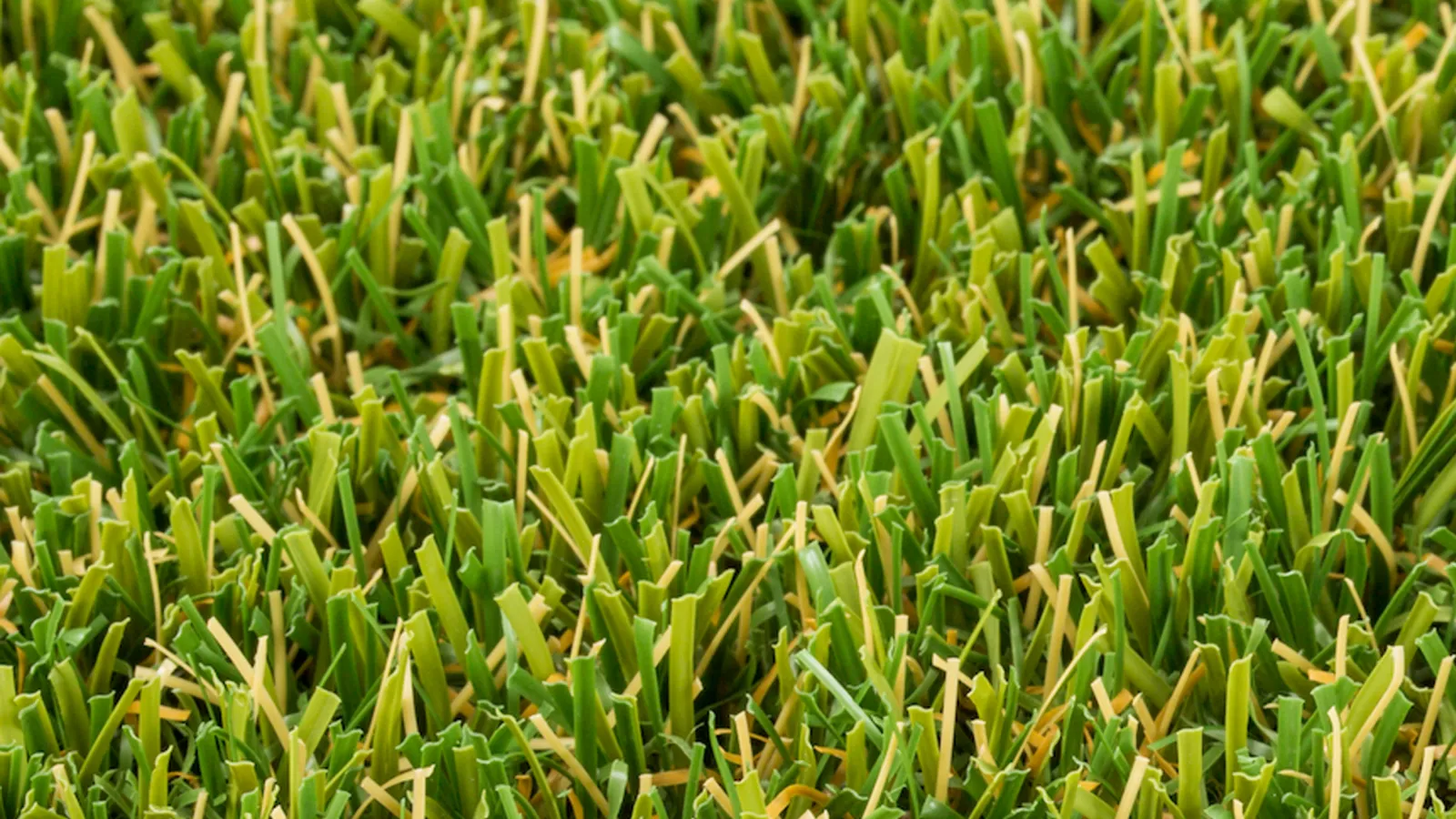
Not every synthetic turf works the same way for sport applications. A product made for a front lawn won't hold up to sprinting, jumping, and sudden direction changes the way a sport-specific turf will. Look for these features when picking a product:
- Shorter pile height, usually between 3/8 inch and 1 inch, for stable footing and true ball bounce
- Dense stitch count so the surface doesn't flatten or shift under repeated impact
- Infill built for athletic use, which cushions joints and keeps traction steady in wet or dry conditions
Residential multi-sport courts built for basketball, tennis, or a mix of both often use a slightly different blend than single-sport setups. Talking through your primary use case before ordering material saves headaches down the road.
Base Preparation: The Step Most People Skip
The turf itself gets most of the attention, but the base underneath decides how the court performs for years to come. A rushed or thin base leads to soft spots, poor drainage, and turf that shifts out of place. A proper build usually includes:
- Excavating the area to remove old grass, roots, and topsoil
- Laying a compacted aggregate base, graded for water runoff
- Adding a shock pad layer for athletic cushioning, depending on the sport
- Installing turf with seamed edges and secured perimeters
Skipping steps here to save time or money almost always shows up later as an uneven playing surface or drainage problems after storms.
Installation Timeline and Process
Most backyard sport court installs take between two and five days, depending on size and site conditions. Excavation and base work take up the bulk of that time, while laying and securing the turf itself moves quickly once the ground is graded correctly.
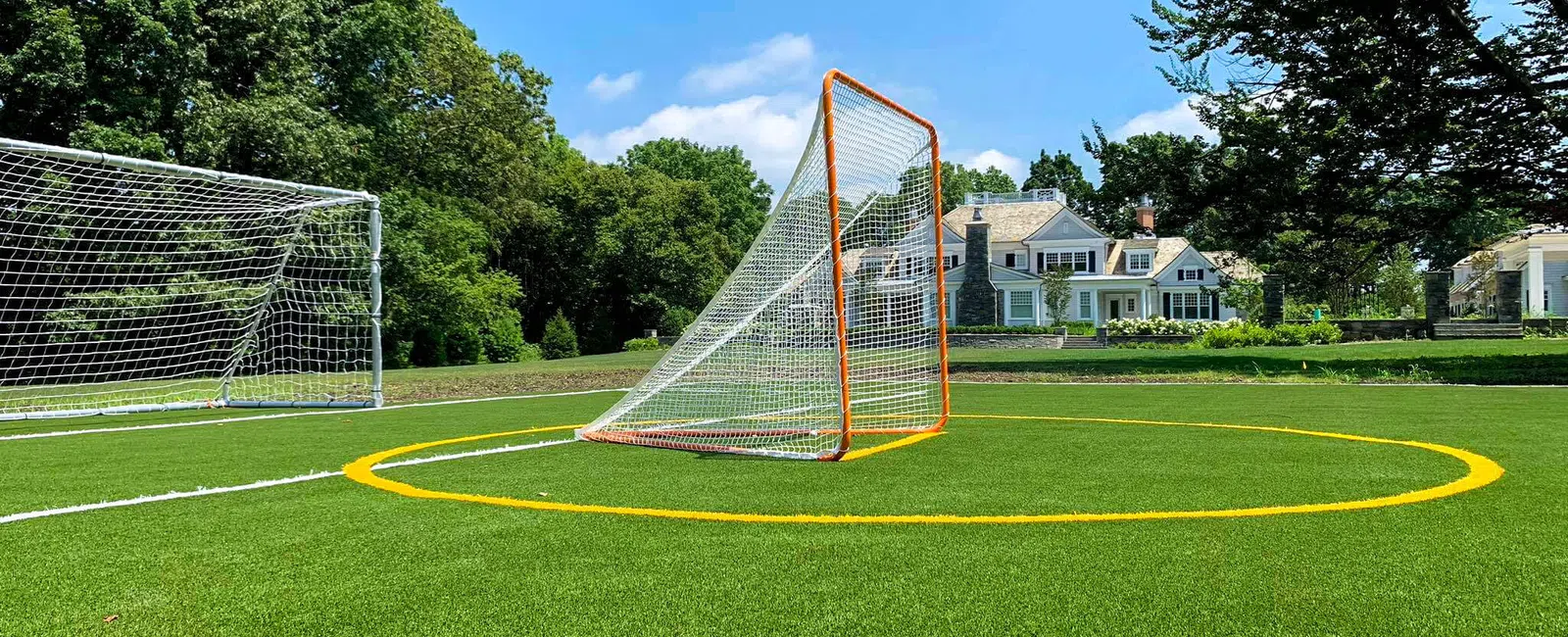
Line markings for basketball, tennis, or other sports get added during the final stage, using durable inlaid lines that won't peel or fade the way painted lines do over a season or two.
What Affects the Cost of a Backyard Sport Court
Pricing for a turf sport court comes down to a handful of factors: total square footage, the type of shock pad or cushioning layer needed, how easy the site is to access, and how much excavation the yard requires before work can even begin. A flat, easy-to-reach yard with decent existing drainage costs less to prep than a sloped lot fighting poor runoff.
Inlaid line markings, fencing, and lighting all add to the total if you want a court ready for evening games with friends. Square footage pricing alone leaves out a lot of what goes into a finished, playable surface, so a written estimate after an on-site visit is the only way to get real numbers for your specific yard. Homeowners who ask for a breakdown of base work versus turf material tend to have a clearer picture of where their budget is going and why.
Keeping Your Court in Shape
Upkeep on a turf sport court is light compared to grass, but a little routine care goes a long way. Brushing the fibers upright after heavy use keeps the surface looking fresh, and a quick hose-down clears dust or debris. Snow can be shoveled off directly without damaging the turf underneath, something no natural grass court could handle.
Ready for a Court That Performs? Talk to Turf Tek USA
At Turf Tek USA, we've built our name on installing turf systems designed for the Northeast, not borrowed from warmer climates. Our team builds each base for proper drainage and grades every court for the specific sport it's meant for, so your investment holds up through Long Island winters and years of active use.
We work with premium, sport-grade turf products you won't find at general landscaping suppliers, backed by a crew that has installed more athletic surfaces across this region than almost anyone else. From basketball half-courts to full tennis setups, we handle the entire project from excavation to final line markings, and we back our work with a solid installation warranty.
If you're ready to turn an unused corner of your yard into a court your family will use for years, give Turf Tek USA a call for a free estimate.