July 06, 2026
Quick Summary
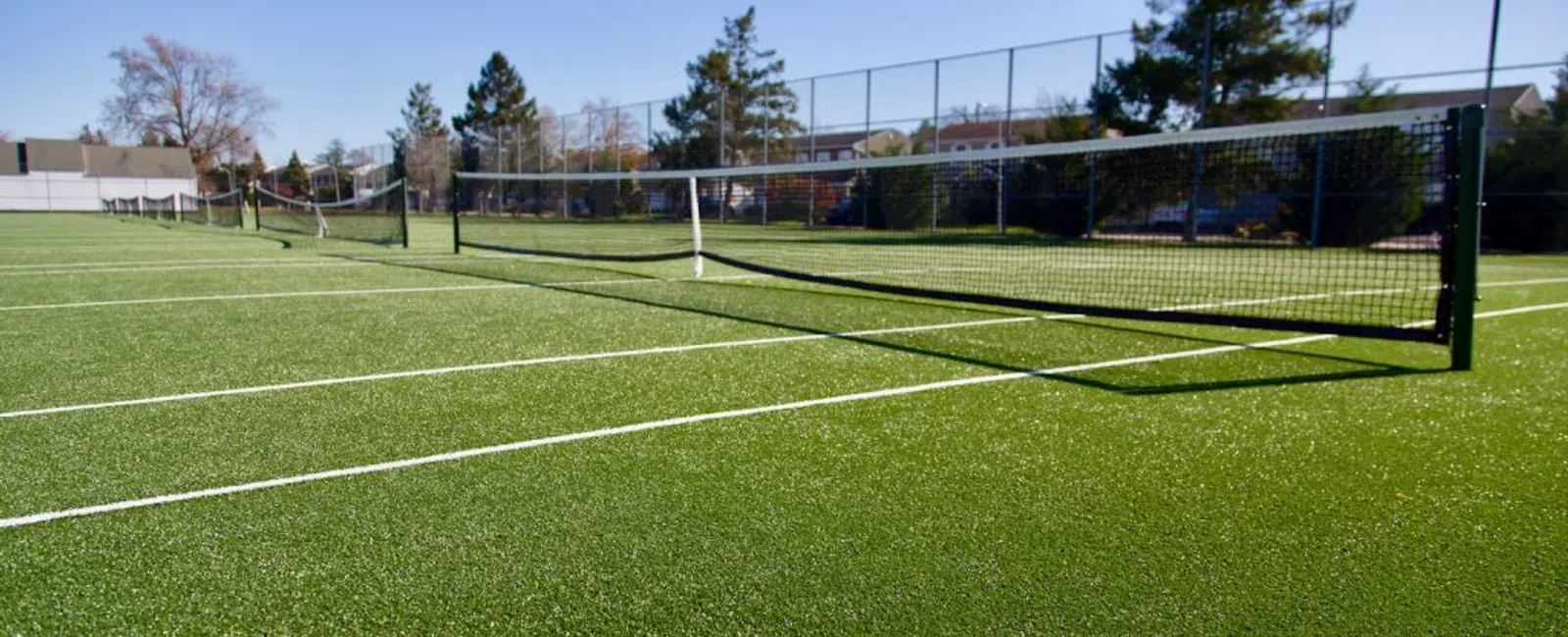
Artificial turf tennis courts hold up better than asphalt or clay through Northeast freeze-thaw cycles, skipping the cracking and resurfacing that hard courts need every few years. A properly built base with strong drainage keeps the court playable right after rain, while pile height and infill choice shape ball speed and bounce consistency. Homeowners in Connecticut and Westchester get a court that plays true season after season with far less upkeep than traditional surfaces.
If you're weighing court surface options for a home or club property, artificial turf for tennis courts is worth a close look before committing to asphalt or clay. Both regions see harsh winters, and the freeze-thaw cycle that comes with them is brutal on hard court surfaces, cracking asphalt and pushing up uneven spots year after year.
Turf sidesteps that problem completely, giving Connecticut and Westchester homeowners a surface built to handle the exact weather swings that wear down traditional courts.
Why Homeowners Are Choosing Turf Courts
Hard courts need resurfacing every few years just to stay playable, and the cost adds up over time. Clay courts need near-constant rolling, watering, and line maintenance to stay in shape for regular play. Turf courts skip both of those maintenance cycles almost entirely.
Once installed, a turf court holds its shape and color through winter freezes and summer heat without the cracking, buckling, or surface breakdown that hard courts eventually show.
Court Dimensions and What to Plan For
A regulation singles court measures 78 feet long by 27 feet wide, and a doubles court widens to 36 feet. Most residential tennis courts also include a buffer zone around the playing lines, giving players room to move without running into a fence right at the baseline.
Before construction starts, it's worth confirming your property has enough flat, usable space for the court plus a few extra feet of clearance on all sides.
Base Construction and Drainage
The base underneath a turf tennis court does most of the work in keeping the surface playable. A proper build includes an excavated and compacted aggregate base, graded for consistent water runoff, topped with a shock-absorbing layer for player comfort and joint protection.
Drainage is worth getting right from day one, since a court that holds standing water after rain becomes unusable until it dries out completely, something asphalt courts struggle with far more than a well-built turf system.
What Affects the Cost of a Turf Court
Pricing depends on court size, site conditions, and how much excavation or grading the property needs before construction can begin. A flat, easy-to-access yard with decent drainage already in place costs less to prep than a sloped lot or a site that needs significant grading work.
Fencing, lighting, and net posts add to the total project cost if they aren't already in place from a prior court. Getting a written estimate after a site visit gives homeowners a realistic number instead of a rough square-footage guess that leaves out site-specific factors.
Turf Speed, Pile Height, and Play Quality
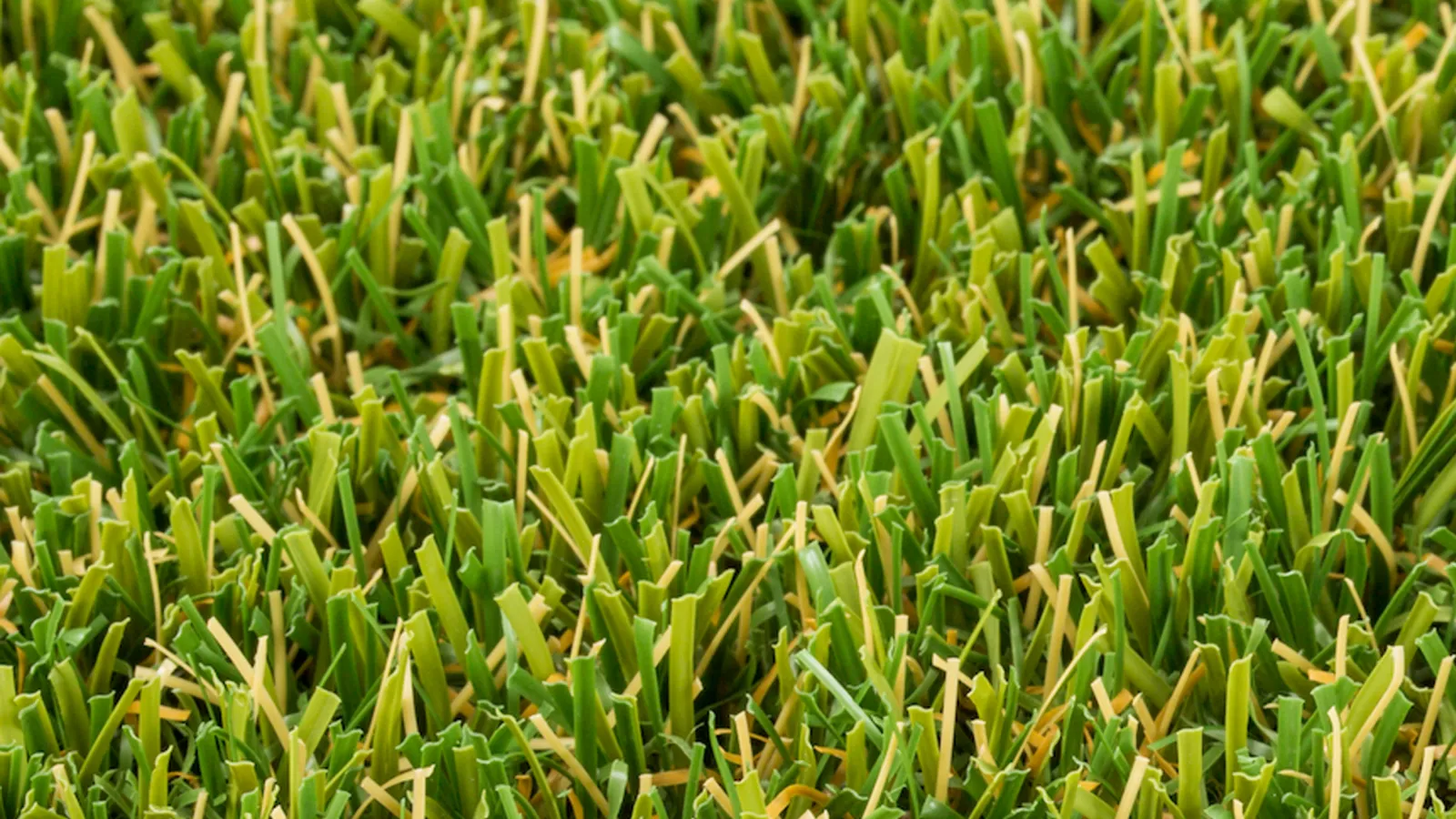
Tennis-specific turf uses a short, dense pile designed for consistent ball bounce and true footing during quick direction changes. Pile height and infill both affect court speed, with shorter pile and firmer infill producing a faster court closer to a hard court feel, while slightly longer pile slows the ball down for a clay-like play style.
Color options like green and blue, similar to what's used at professional tournaments, are common choices for a clean, familiar look.
Maintenance and Longevity
Upkeep on a turf tennis court is straightforward compared to traditional surfaces. Brushing the fibers periodically keeps the blades upright and playing consistent, and a hose-down clears dust or debris between matches.
There's no annual resurfacing, no crack filling, and no seasonal rolling required, which adds up to real savings over the life of the court.
Get Your Tennis Court Built Right with Turf Tek USA
At Turf Tek USA, we build tennis courts across Westchester and Connecticut using turf systems engineered for Northeast weather, not products borrowed from warmer climates. Our crews handle excavation, base construction, and turf installation from start to finish, with no subcontractors cutting corners along the way.
We work with sport-specific turf built for true ball response, backed by our installation warranty and a team that's installed athletic surfaces across this entire region. If you're ready to swap a cracking hard court or high-maintenance clay court for a turf system built to last, give Turf Tek USA a call for a free estimate.