Quick Summary
The debate around artificial turf vs. natural grass often centers on installation pricing, but long-term ownership costs matter far more. Natural lawns require constant water usage, mowing, fertilizer treatments, and repairs that increase yearly expenses. Artificial turf lowers maintenance demands, cuts irrigation costs, and maintains a clean appearance for years. Homeowners looking at artificial grass vs. real grass cost should evaluate durability, upkeep, labor, and property usage before making a final decision.
Fresh green lawns often hide years of expensive maintenance, water bills, patch repairs, and seasonal frustration. Homeowners comparing grass vs. turf cost usually focus on installation pricing first, yet long-term ownership tells a very different story. Natural grass demands regular mowing, irrigation, fertilizer, weed treatment, and reseeding throughout the year.
Artificial turf carries a higher upfront investment, though it reduces ongoing lawn expenses dramatically over time. For busy families, pet owners, athletes, and retirees, modern turf systems create a cleaner, more predictable outdoor surface that stays visually consistent through changing seasons and heavy daily use.
Initial Installation Expenses
At first glance, natural grass appears to be the less expensive option. That price difference changes quickly after the first few years of lawn ownership. Irrigation systems, lawn chemicals, mowing equipment, reseeding, and seasonal treatments steadily increase total spending.
Higher-end turf installations also include excavation, compacted base layers, drainage systems, edging, and professionally secured seams. These construction details directly affect lifespan and surface performance.
Water Usage Creates Long-Term Expenses
Water bills become one of the largest hidden lawn expenses. Natural grass consumes thousands of gallons during warm months, especially in regions facing dry summers or watering restrictions.
Artificial turf removes nearly all irrigation demands except occasional rinsing. Many homeowners notice substantial utility savings after replacing natural lawns with synthetic surfaces. Over ten to fifteen years, reduced irrigation alone can offset a large portion of installation costs.
This advantage matters even more for large residential landscape projects, rooftop spaces, athletic zones, and pet areas that experience constant foot traffic.
Maintenance Costs Add Up Quickly
Natural grass requires ongoing labor and seasonal attention. Weekly mowing, edging, fertilizer applications, aeration, weed control, pest treatment, and patch repair create steady yearly expenses.
Artificial turf maintenance remains relatively simple. Most properties only need light rinsing, brushing, debris removal, and occasional infill adjustments. Turf systems also eliminate muddy patches, bare spots, and dormant brown areas common with natural lawns.
Families with pets often appreciate how artificial turf handles heavy use without turning into dirt during wet weather. Sports-focused households also prefer stable playing surfaces for training and recreation.
When comparing artificial grass vs. real grass cost, maintenance often becomes the deciding factor.
Durability Changes the Financial Picture
Natural grass struggles under repeated traffic. Backyard sports, pets, children, outdoor entertaining, and changing weather conditions wear down living turf quickly. Damaged sections frequently require reseeding or sod replacement.
Artificial turf maintains a more uniform appearance under regular activity. High-quality systems use dense fibers, strong backing materials, UV-resistant yarns, and durable infill layers designed for long-term performance.
Lower-grade turf products flatten faster, fade unevenly, and wear out sooner. Homeowners should look beyond short-term pricing and focus on product construction, drainage capability, and installation quality.
A professional artificial grass provider and installer can explain how material selection affects lifespan and maintenance requirements.
Property Appearance and Daily Convenience
Natural grass changes constantly throughout the year. Rain creates mud. Heat creates dry patches. Heavy use leaves worn pathways across the lawn.
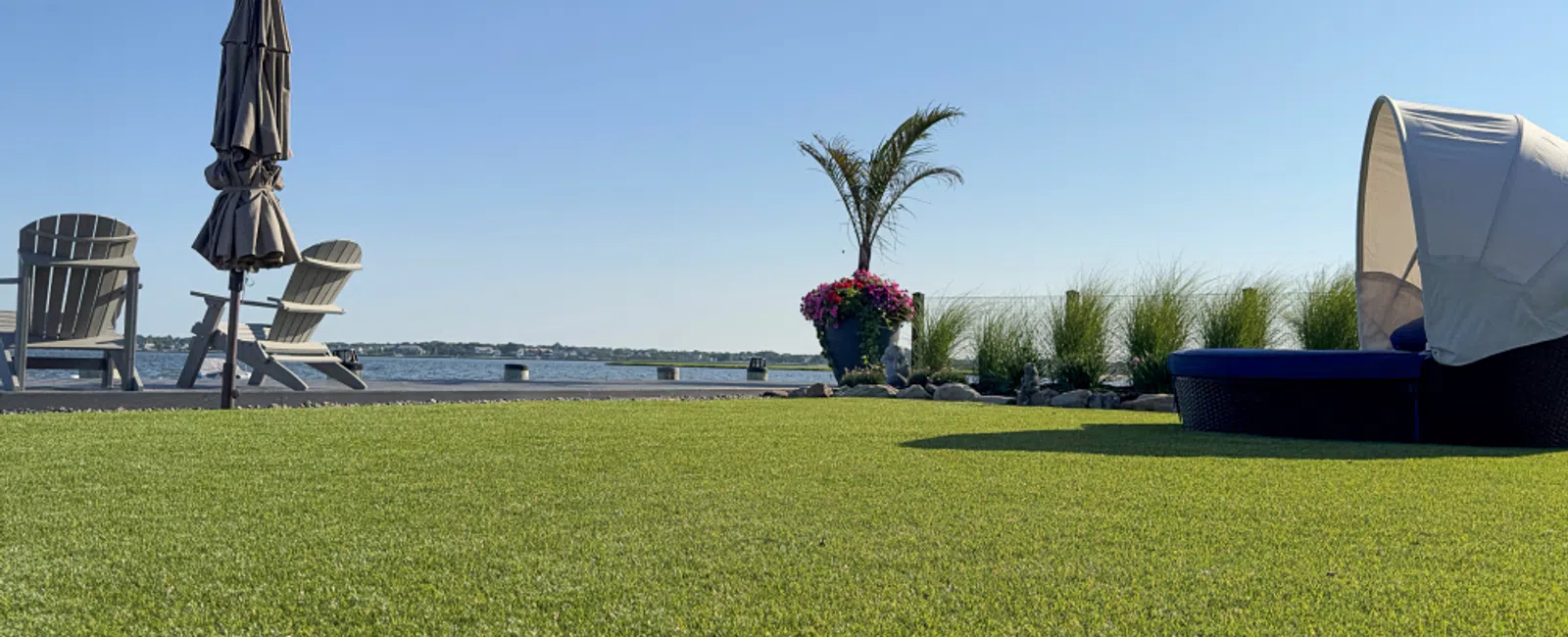
Artificial turf stays visually consistent across all seasons. That reliability appeals to homeowners who want a polished outdoor space without weekly lawn work. Rooftop installations, private schools, athletic facilities, and residential landscape projects often benefit from this cleaner appearance.
Artificial turf also reduces outdoor allergens and eliminates fertilizer runoff. Many homeowners appreciate the cleaner transition between indoor and outdoor living areas.
Upgrade Your Lawn with a Surface Built for Long-Term Savings
At Turf Tek USA, we build artificial turf systems designed for durability, drainage performance, and long-term value. Our team installs premium USA-made turf for residential landscape projects, rooftops, athletic spaces, and pet areas across the Northeast.
If you are comparing grass vs. turf cost for your property, contact Turf Tek USA today and invest in a cleaner, lower-maintenance lawn built to last.