June 08, 2026
Quick Summary
Blending artificial and natural grass in the same yard is more common than many homeowners realize, and when planned carefully, the result can look completely seamless. Success depends on how the two surfaces connect, how drainage is handled at the transition area, and how the artificial turf is maintained to remain visually consistent with the surrounding lawn. This guide covers the key factors to consider before combining both surfaces in your landscape.
The idea of placing artificial turf next to real grass often raises questions about whether the two can coexist without creating an obvious contrast.
The answer is yes, and many homeowners intentionally choose this approach because it offers practical advantages. Natural grass thrives in some areas while struggling in others. High-traffic pathways become worn, shady sections beneath trees have difficulty growing, and steep slopes can be difficult to maintain.
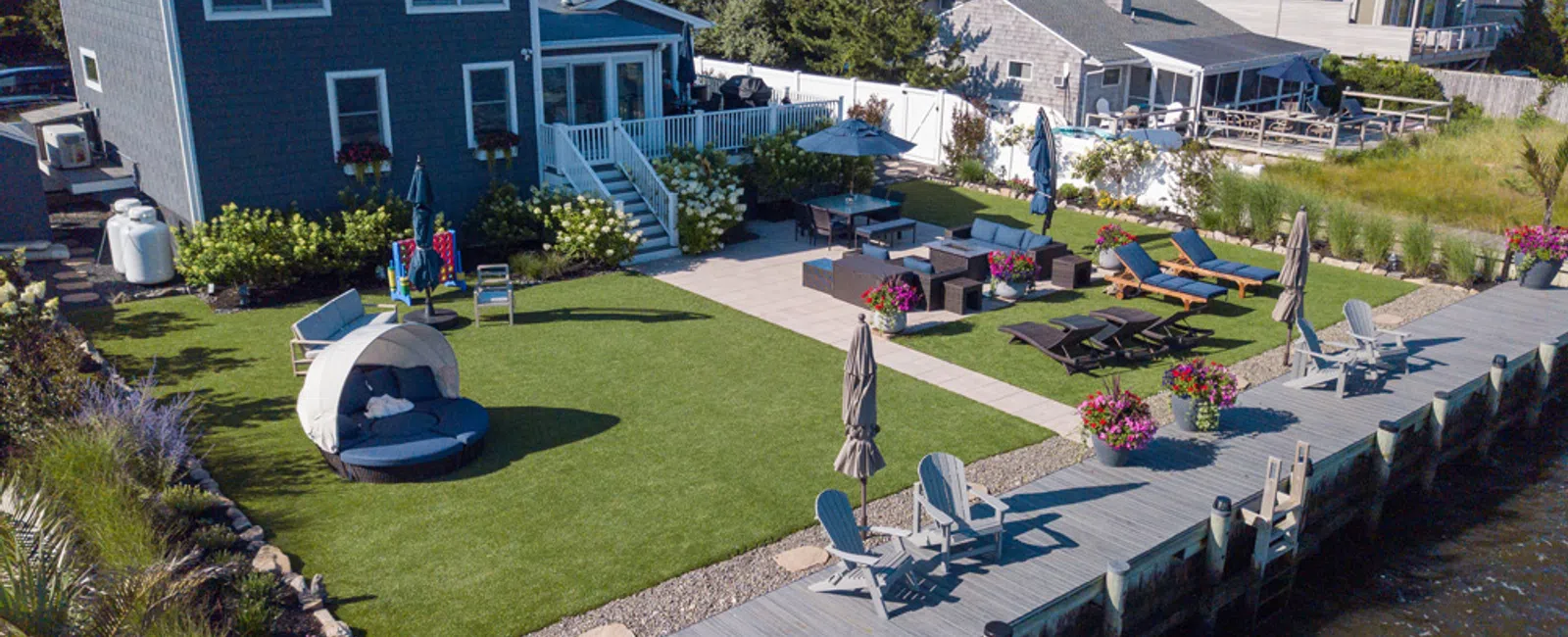
Replacing problem areas with artificial turf while preserving healthy sections of natural grass creates a landscape that is attractive and easier to manage. Artificial turf next to real grass can be both visually appealing and highly practical when designed correctly.
Where The Two Surfaces Meet
The transition between artificial and natural grass is one of the most important technical details in this type of project. If the border is poorly constructed, the contrast between the two surfaces becomes immediately noticeable. When done correctly, the eye moves naturally across the landscape without detecting a harsh divide.
Matching the height of both surfaces is critical. Natural grass has its own root system and soil depth that determine its finished elevation. The artificial turf system must be excavated or built up to align perfectly with that height.
If one surface sits higher than the other, the transition line becomes obvious. Over time, natural grass can begin to grow over, under, or into the edge of the turf, creating an untidy appearance. Artificial turf next to real grass looks its best when both surfaces meet evenly and are separated with attention to detail.
Drainage Across The Boundary
Natural grass and artificial turf drain differently. Natural grass absorbs water through the soil, while artificial turf directs water through the backing and into the base below.
When the two materials meet, water movement must be carefully considered. Improper drainage can direct runoff from one area into another and create unnecessary problems. The installation should account for the way water naturally moves across the property.
Flat landscapes are usually straightforward, but sloped yards and more complex designs require additional planning. Proper drainage design is one reason professional installation matters, even for projects that appear relatively simple.
Keeping The Look Consistent
Many homeowners worry that artificial turf and natural grass will look noticeably different. Modern turf products have evolved significantly and no longer resemble the bright, uniform surfaces of earlier generations.
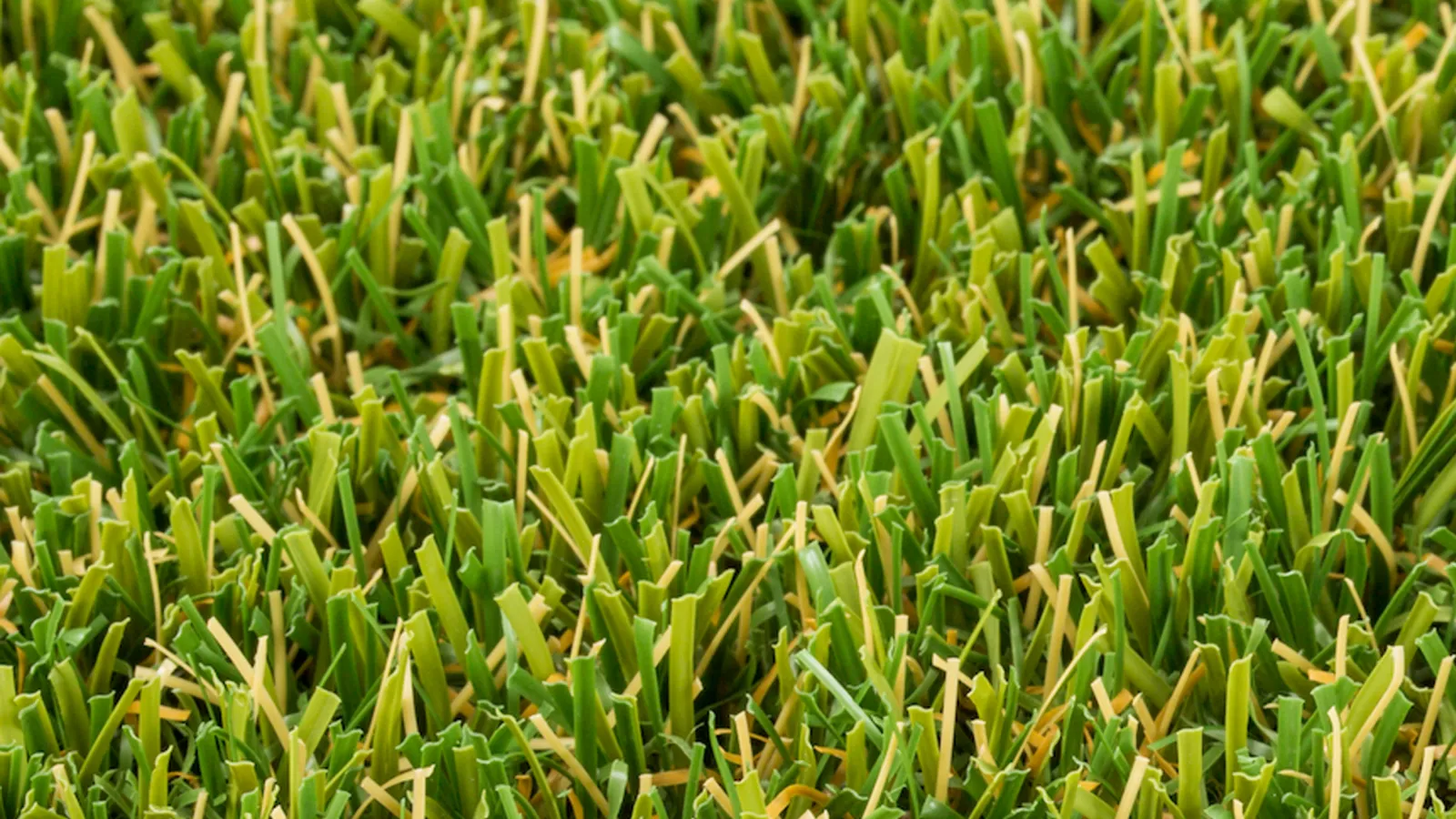
Products such as our Natural Turf and Hampton Turf lines are designed to mimic the color variation, texture, and appearance of healthy natural grass. Matching the color and blade style of your existing lawn helps create a more cohesive landscape.
Discussing product options with your installer before making a final selection is important. The closer the artificial surface resembles your existing lawn, the more natural the finished result will appear.
Ready to create a yard that gets the best out of both worlds? Reach out to our team at Turf Tek, and we'll help you figure out the right split and the right products for your specific space.