Quick Summary
Choosing the right artificial turf installer determines whether your project looks great for fifteen years or starts showing problems within the first one. This checklist covers exactly what to look for: the certifications that actually matter, the specific questions to ask before signing a contract, the red flags that signal a corner-cutting installer, and tips for vetting local contractors in your area. Use it as a working reference while you collect quotes.
Synthetic turf installation is a system, not a product, and the installer matters just as much as the turf itself. Two crews using identical material can produce dramatically different results depending on how the base is built, how seams are joined, and how much attention goes into site-specific details. The questions and red flags below are designed to help you separate installers who do this well from those who do not.
Certifications and Credentials That Actually Matter
Not every credential carries equal weight, and some companies lean on vague claims of "certification" without specifying what that actually means. Here is what to look for.
IPEMA certification
The International Play Equipment Manufacturers Association certifies turf and infill products used in playground safety surfacing for compliance with federal standards. If your project involves a playground or any space where children will be playing, ask whether the specific turf and infill products being used carry IPEMA certification.
Business licensing
Confirm the company holds a valid contractor's license for your state. This is a baseline requirement, not a differentiator, but it is worth verifying directly rather than assuming.
Insurance and bonding
A legitimate installer carries general liability insurance and workers' compensation coverage. Ask to see proof of both. This protects you if a worker is injured on your property or if property damage occurs during installation. Any installer unwilling to provide this documentation should be considered a serious red flag.
Years in business at the same name
Longevity under one consistent business name is a meaningful signal in this industry specifically, because a number of installers fold a company after a few years of underperforming work and reopen under a new name to escape accountability for past installations.
Questions to Ask Every Installer Before Signing
These questions are designed to surface real information, not just confidence and sales talk.
"Can you walk me through your base preparation process step by step?"
A qualified installer should be able to describe excavation depth, base material type, compaction method, and drainage planning without hesitation. Vague answers here are one of the clearest warning signs in the entire vetting process.
"What is your drainage rate, and how is it achieved?"
A well-built base should support drainage rates well over 100 inches per hour, with premium installations reaching 400 inches per hour or more. If an installer cannot answer this with a number, drainage was likely not a major part of their planning process.
"Are you using your own crew, or subcontracting this job?"
Many companies that win the contract subcontract the actual installation to a separate crew, sometimes with little oversight of quality. Ask directly whether the people doing the work are direct employees of the company you are hiring, and ask how long that crew has worked together.
"What warranty do you offer, and what specifically does it cover?"
Get the warranty terms in writing before signing anything. Ask separately about product warranty (covering the turf material itself) and installation warranty (covering the labor and workmanship). These are often different lengths and cover different issues.
"Can I see two or three completed projects similar to mine, ideally a few years old?"
A brand-new installation looks good on day one regardless of quality. Ask to see projects that have had time to settle and weather actual seasons. This is the single best way to judge how an installation will hold up long-term.
"What turf product do you recommend for my specific use, and why?"
The answer should reference your actual traffic levels, pets, climate, and intended use, not just whichever landscape turf option happens to be cheapest or most profitable for the installer.
"What happens if there's a problem after installation?"
Ask specifically how repair requests are handled, what the response time typically looks like, and whether there are additional charges for post-installation service calls.
Red Flags That Signal a Corner-Cutting Installer
Watch for these signs during the quoting and contracting process.
Pricing significantly below other quotes
If one quote comes in dramatically lower than two or three others for a comparable project, find out why. It usually means a thinner base, lower-grade turf, or less labor time, all of which show up later as performance problems.
Reluctance to discuss base preparation in detail
This is one of the most technical and important parts of installation. An installer who glosses over it or gives generic answers is signaling that this step does not get the attention it needs.
No written warranty, or warranty terms that are vague
"We stand behind our work" is not a warranty. Get specific terms, durations, and coverage details in writing.
No proof of insurance or licensing when asked
This should end the conversation immediately. Installing without proper coverage puts you at financial risk if anything goes wrong.
High-pressure sales tactics or "today only" pricing
Legitimate installers do not need artificial urgency to close a deal. This tactic is far more common among less established or transient companies.
Inability to provide local references or completed local projects
An installer with genuine local experience should have no trouble pointing you to nearby completed work, ideally that you can visit in person.
Company name or contact information that has changed recently
This can indicate a business that previously operated under a different name, sometimes due to past performance issues or unresolved complaints.
Tips for Vetting Local Contractors Specifically
National chains and local specialists each have advantages, but local contractor vetting requires a slightly different lens.
Check how long they have served your specific region
Climate matters enormously for turf installation. An installer with deep experience in your specific regional weather patterns, whether that means freeze-thaw cycles, heavy seasonal rainfall, or extreme summer heat, will plan the installation differently than a generalist.
Look for local reviews with specific details, not just star ratings
A five-star average means little without substance behind it. Look for reviews that mention specific project types, communication quality, and how the company handled any issues that came up.
Ask about their typical project radius
A company that primarily serves a small geographic area has more incentive to protect its local reputation and is more likely to be reachable quickly if a post-installation issue arises.
Verify their physical business address
A legitimate local company should have a real, verifiable business location, not just a phone number and a website. This matters for accountability if something goes wrong months or years after installation.
Ask how they source materials
Local installers who manufacture or source their own exclusive turf products typically have more control over quality and consistency than those reselling generic, mass-imported material.
Putting the Checklist to Work
Use this as a working reference while you collect estimates:
- Confirm licensing, insurance, and bonding
- Ask about IPEMA certification if the project involves a playground
- Ask the base preparation question and listen for specific, confident detail
- Get the drainage rate and how it is achieved
- Confirm whether the crew is direct employees or subcontracted
- Get warranty terms in writing, separated by product and installation coverage
- Request to see completed local projects that are at least one to two years old
- Watch for red flags throughout the quoting process, not just at the end
- Compare at least two to three quotes before deciding
A company that answers every item on this list clearly and confidently, without hesitation or vague deflection, is very likely a reliable choice. A company that struggles with several of these questions is worth reconsidering, regardless of how attractive the initial quote looks.
Work With an Installer That Passes Every Item on This List
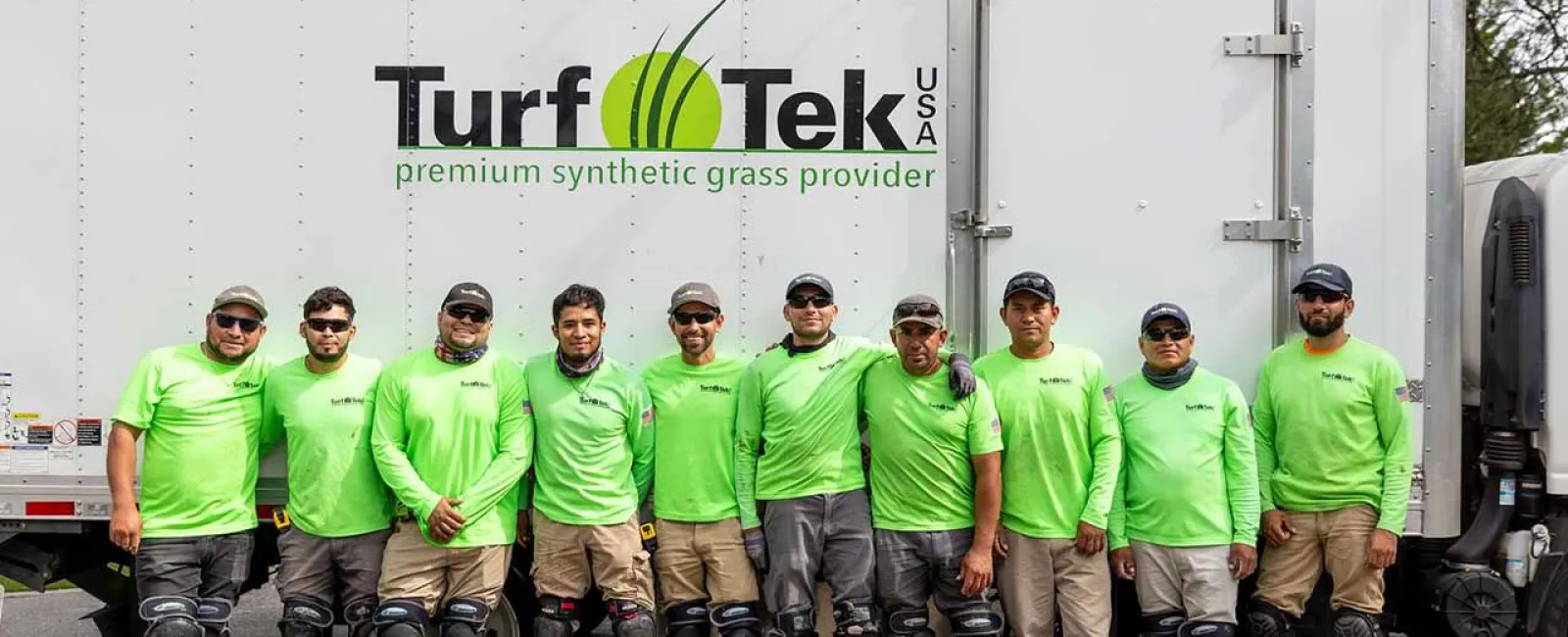
Turf Tek USA has installed artificial turf across the Northeast long enough to have built our own proprietary installation system engineered specifically for regional weather and drainage demands. Our teams are experienced and knowledgeable and our commercial installation work meets IPEMA certification standards across all playground and play area projects.
We use American-made materials, back every project with a 10-year product warranty and 2-year installation warranty. We have served Long Island, Westchester, and the entire New York Tri-state region for over 10 years under the same name. Call (631) 651-5777 or contact us for a free site visit, and feel free to ask us every question on this list.