May 27, 2026
Quick Summary
Artificial turf creates a cleaner and safer pool environment than natural grass or concrete surfaces. It reduces mud, improves traction around wet areas, and handles heavy foot traffic without damage. High-quality turf also drains quickly, resists UV exposure, and lowers outdoor maintenance demands. Homeowners considering an artificial turf pool deck should focus on drainage capability, cooling technology, blade structure, and installation quality before selecting a product.
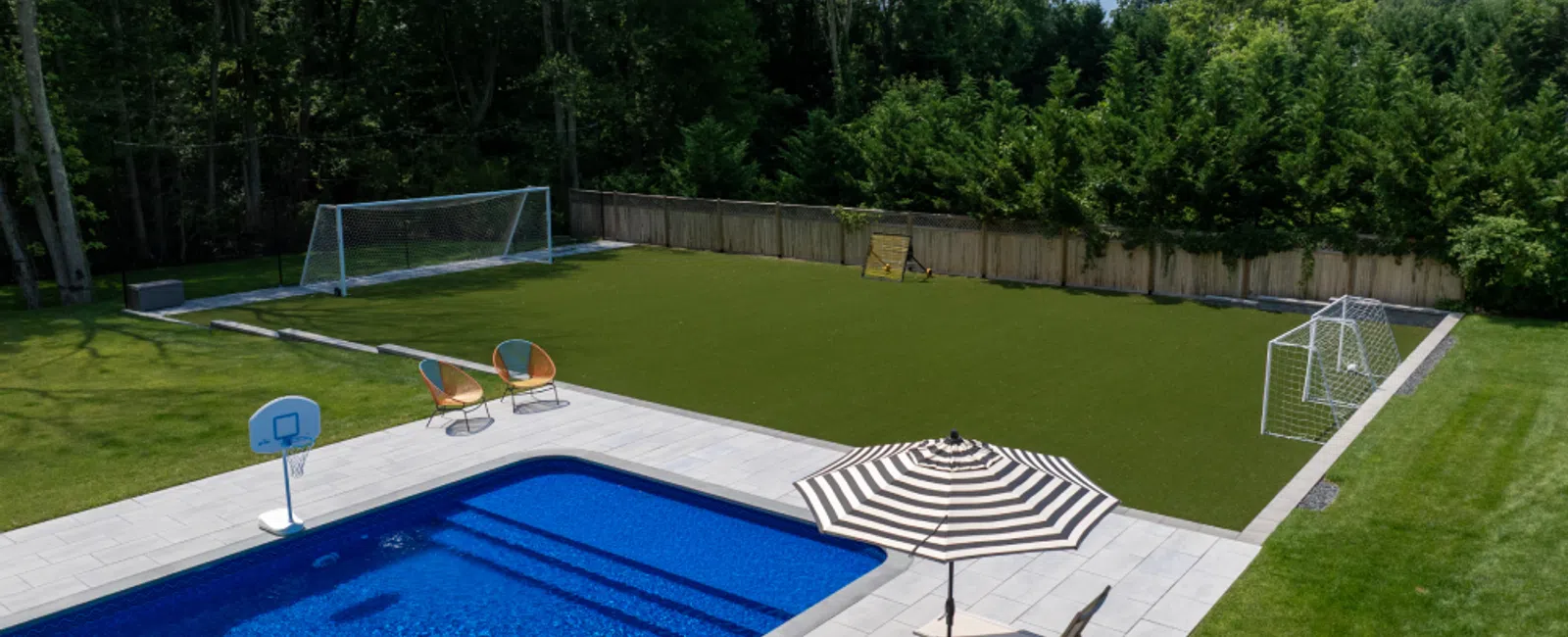
Pool areas experience constant moisture, heavy foot traffic, direct sunlight, and regular exposure to chlorine, which quickly wear down natural lawns and hard surfaces. That is why many homeowners now install artificial turf near pool spaces to create cleaner, safer, and easier-to-maintain outdoor environments.
Unlike natural grass, synthetic turf does not cause muddy grass blades to fall into the water, or develop bare patches around splash zones. Modern turf systems also improve drainage, reduce slipping risks, and stay visually consistent through every season.
For families, pet owners, and active households, turf creates a practical poolside surface with long-term value and daily convenience.
Why Homeowners Replace Grass Around Pools
Natural grass struggles near pools because constant splashing saturates the soil and weakens root systems. Foot traffic from children, guests, and pets creates worn pathways and muddy patches that spread dirt directly into the water.
Artificial turf eliminates many of these issues. Synthetic fibers stay intact despite heavy use, while advanced drainage systems move water away from the surface quickly. Homeowners spend less time cleaning debris from pools and less money repairing damaged lawns.
Artificial turf also creates a more polished appearance around residential landscape projects, rooftop leisure areas, and entertainment spaces.
Better Traction Around Wet Surfaces
Pool decks become slippery fast, especially when concrete or stone surfaces stay wet for long periods. Artificial turf offers more grip under bare feet, reducing slipping risks around active pool areas.
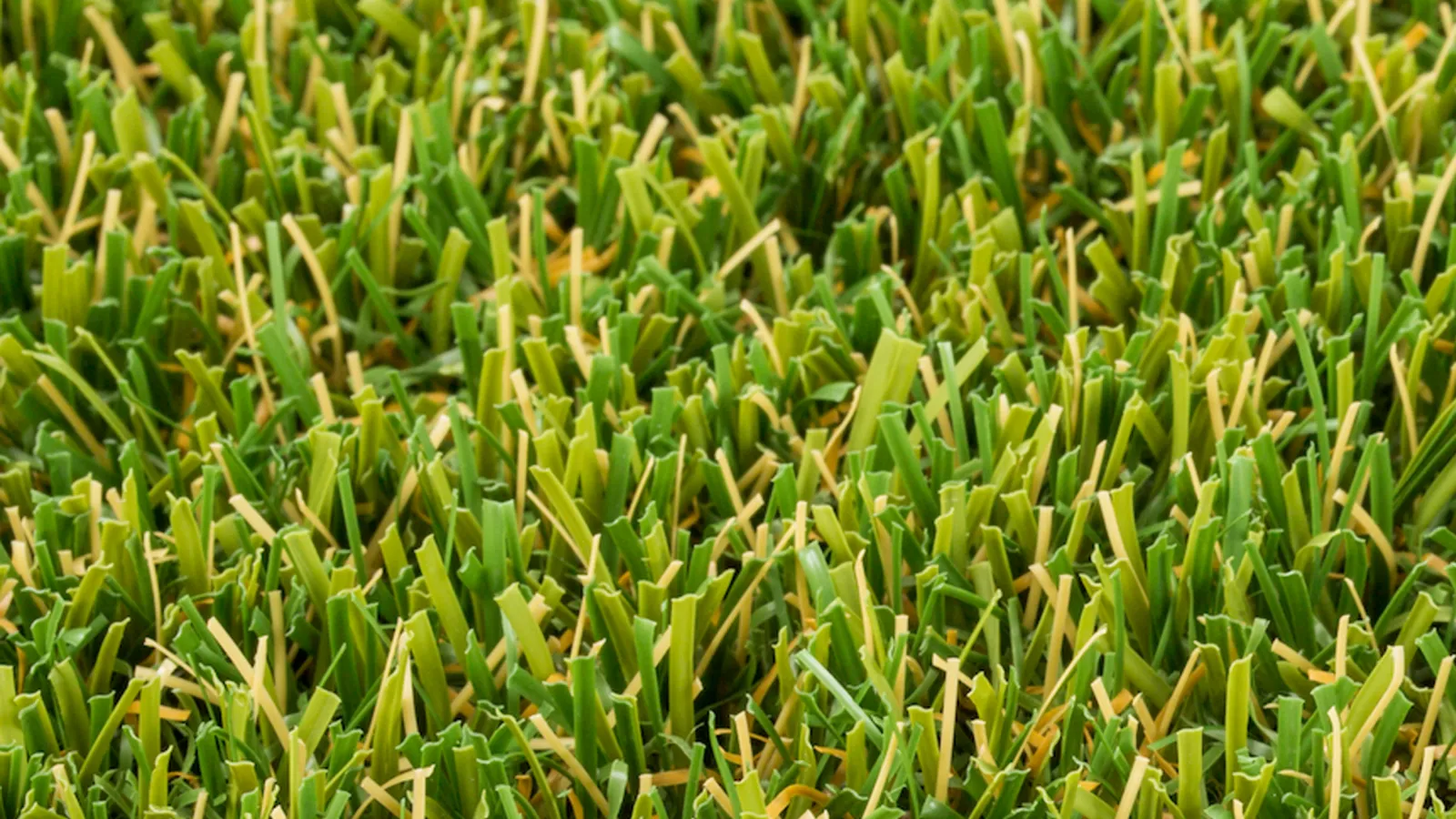
Many turf products use blade shapes designed to improve stability and surface recovery. W-shaped and wave-shaped fibers stand upright more effectively after repeated use, helping the surface maintain traction and visual consistency.
Drainage Matters More Than Appearance
Drainage performance should remain one of the highest priorities when selecting artificial turf near pool installations. Pool splash zones create constant moisture exposure, so poor drainage can lead to standing water and unpleasant odors.
High-quality turf systems use permeable backing materials that move water through the surface efficiently. Fast-draining turf dries quicker after rainstorms and pool activity, which helps maintain a cleaner outdoor environment.
Professional installation also matters. Incorrect grading or base preparation can create pooling problems even with premium turf materials.
Heat Reduction Features Improve Comfort
Artificial turf can absorb heat during peak summer temperatures, especially around uncovered pool decks. Modern turf technology now addresses this issue through reflective blade structures and cooling infill systems.
Some turf fibers reflect sunlight more effectively, helping reduce surface temperatures during hot weather. Cooling infills also help maintain a more comfortable surface for bare feet.
Pile height affects comfort as well. Taller turf creates a softer feel around lounging areas, while shorter turf works better for recreation zones and easier cleanup.
Pool Areas Need Durable Turf Construction
Pool environments expose turf to sunlight, chlorine, water, sunscreen residue, and constant movement. Lower-grade turf products flatten faster and fade unevenly over time.
Homeowners should pay close attention to face weight, yarn composition, UV stabilization, and backing strength before installation. It is important to have a turf that creates a soft feel underfoot, while providing stronger backing systems to improve durability in high-traffic areas.
A professional artificial grass provider and installer can explain how turf construction affects long-term performance around pools.
Artificial Turf Around Above-Ground Pool Installations
Artificial turf around above-ground pool areas creates a cleaner transition between the pool structure and the surrounding yard. Instead of dealing with mud, weeds, or worn grass, homeowners gain a stable surface that handles moisture more effectively.
This setup also reduces dirt transfer into the pool and creates a cleaner path for guests moving between seating areas and the water.
Transform Your Pool Area with Turf Built for Long-Term Performance
At Turf Tek USA, we install premium USA-made turf systems designed for pool decks, residential landscape projects, rooftops, athletic spaces, and pet areas across the Northeast. Our team focuses on drainage performance, clean finishing work, and long-term durability that handles heavy daily use.
Contact Turf Tek USA today to create a safer, cleaner, and lower-maintenance poolside space built to last.